


Automatic Feeding Rivet Machine for Modern Industrial Production
Introduction
As manufacturing industries continue moving toward automation and lean production, fastening processes are becoming a key area for efficiency optimization. Traditional manual riveting methods often create bottlenecks due to inconsistent installation speed, operator fatigue, and quality variation. To address these challenges, more manufacturers are adopting the Automatic Feeding Rivet Machine as a reliable solution for high-efficiency assembly operations.
Automatic riveting systems combine pneumatic or hydraulic riveting technology with intelligent feeding mechanisms to streamline the installation process. By automatically supplying rivets to the tool nosepiece, the machine eliminates repetitive manual loading and significantly improves production throughput.
Today, automatic feeding rivet machines are widely used in automotive manufacturing, metal fabrication, electrical enclosures, rail transportation, HVAC systems, and industrial equipment assembly.
What is an Automatic Feeding Rivet Machine?
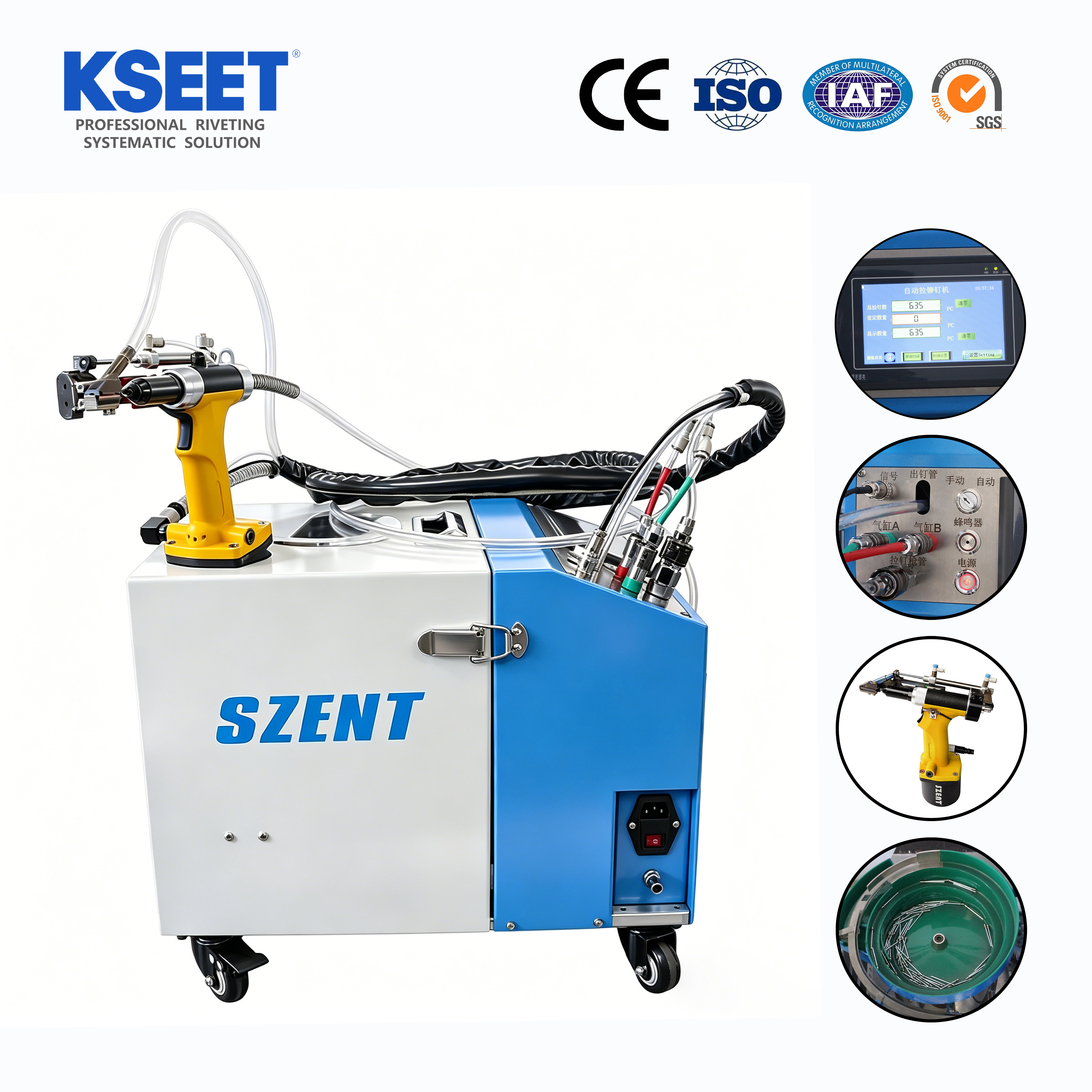
An Automatic Feeding Rivet Machine is an industrial fastening system designed to automatically deliver rivets from a feeding unit to the riveting tool during assembly operations.
The system typically consists of:
- Automatic rivet feeder
- Pneumatic or hydraulic riveting gun
- Rivet transfer hose
- Control module
- Workstation integration system
Unlike traditional riveting tools that require operators to manually place rivets one by one, automatic feeding systems continuously supply rivets to the installation head, reducing cycle time and improving operational consistency.
Key Advantages of Automatic Feeding Rivet Machines
1. Significantly Increased Production Efficiency
One of the primary benefits of automatic feeding riveting equipment is the dramatic increase in installation speed.
Traditional riveting processes involve:
- Picking rivets manually
- Positioning rivets individually
- Repeating loading actions
Automatic systems eliminate these repetitive motions, allowing operators to focus only on positioning and triggering the tool.
Benefits include:
- Faster riveting cycles
- Reduced downtime
- Continuous operation capability
- Higher daily production output
For large-scale manufacturing environments, this improvement directly increases production capacity.
2. Reduced Labor Intensity
Manual riveting can cause operator fatigue during long production shifts, especially in high-volume assembly lines.
Automatic feeding machines reduce physical workload by:
- Eliminating manual rivet handling
- Reducing repetitive movement
- Simplifying installation procedures
This creates a more ergonomic working environment while improving operational stability.
3. Improved Riveting Consistency
Consistency is critical in industrial fastening applications. Variations in rivet placement or installation quality can lead to assembly defects and product failure.
Automatic riveting systems help maintain stable installation performance through:
- Controlled rivet delivery
- Consistent air pressure output
- Stable riveting stroke
- Reduced human error
The result is improved fastening reliability and lower defect rates.
4. Lower Production Costs
Although automated riveting equipment requires initial investment, it provides substantial long-term cost savings.
Cost reduction areas include:
- Reduced labor requirements
- Lower rework rates
- Improved material utilization
- Increased production speed
For manufacturers with continuous production demand, the return on investment is highly competitive.
5. Compatibility with Automated Production Lines
Modern factories increasingly adopt semi-automatic and fully automatic manufacturing systems.
Automatic feeding rivet machines can integrate with:
- Robotic workstations
- Conveyor assembly systems
- PLC control systems
- Smart manufacturing environments
This makes them suitable for Industry 4.0 production strategies and intelligent factory upgrades.
Common Industrial Applications
Automotive Manufacturing
The automotive industry requires high-speed and repeatable fastening operations for:
- Body panels
- Interior structures
- Battery systems
- Seat assemblies
Automatic riveting equipment improves both assembly speed and fastening consistency.
Sheet Metal Fabrication
Metal cabinets, electrical enclosures, and industrial housings often require large quantities of blind rivets.
Automatic feeding systems help manufacturers achieve:
- Faster batch production
- Cleaner assembly workflow
- Stable fastening quality
Rail Transportation
Railway manufacturing demands reliable structural fastening solutions capable of maintaining long-term vibration resistance.
Automatic riveting systems improve installation precision and structural consistency in transportation applications.
HVAC and Industrial Equipment
HVAC ducts, ventilation systems, and industrial machinery frequently use blind rivets for lightweight structural assembly.
Automatic rivet machines support efficient continuous production in these sectors.
Key Technical Features to Consider
When selecting an automatic feeding rivet machine, manufacturers should evaluate the following parameters:
Rivet Compatibility
Ensure compatibility with:
- Open-end blind rivets
- Structural rivets
- Sealed rivets
- Multi-grip rivets
Rivet Size Range
Typical supported sizes include:
- 3.2 mm
- 4.0 mm
- 4.8 mm
- 6.4 mm
Feeding Speed
A stable feeding mechanism is critical for maintaining uninterrupted operation.
Air Pressure Stability
Consistent pneumatic performance ensures uniform riveting quality.
Maintenance Accessibility
Easy maintenance design minimizes downtime and improves equipment reliability.
Why Choose SZENT Automatic Feeding Rivet Machines?
SZENT focuses on high-efficiency industrial riveting solutions designed for modern manufacturing environments.
Our automatic riveting systems offer:
- Stable feeding performance
- High-speed riveting capability
- Durable industrial structure
- Flexible rivet compatibility
- Custom automation integration support
Whether for standalone workstations or automated production lines, SZENT provides reliable riveting solutions tailored to industrial production needs.
Contact Us
Our engineering team can provide customized automatic riveting solutions based on your rivet type, material thickness, and production line requirements.
Engineering Summary
From an engineering and manufacturing perspective, automatic feeding rivet machines significantly improve fastening efficiency by reducing non-productive handling time and stabilizing installation consistency. The integration of automated rivet delivery systems minimizes operator dependency while supporting continuous high-volume production. For industrial assembly environments requiring repeatable fastening quality, reduced labor intensity, and scalable automation capability, automatic riveting systems provide a practical and cost-effective production solution.