


Application Characteristics of Interlock Blind Rivets in Industrial Assembly
What is an Interlock Blind Rivet?
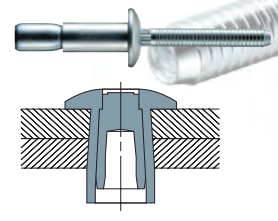
Interlock blind rivets are a type of high-strength structural blind fastener designed with a mechanically locked mandrel system. During installation, the mandrel is retained inside the rivet body, forming a double-locking structure that significantly improves shear strength, vibration resistance, and hole-filling capability.
Unlike standard blind rivets, interlock rivets are engineered for critical industrial assemblies requiring structural reliability under dynamic loads.
Working Principle
During installation:
- The rivet is inserted into a pre-drilled hole.
- The setting tool pulls the mandrel inward.
- The rivet body expands radially, filling the hole tightly.
- The mandrel is mechanically locked inside the body instead of fully separating.
- A strong, permanent joint is formed on the blind side.
This mechanism creates a high-clamping-force, vibration-resistant fastening point suitable for demanding environments.
Key Application Characteristics
1. High Structural Strength
Interlock blind rivets provide excellent shear and tensile strength, making them suitable for load-bearing assemblies where conventional blind rivets may fail.
They are commonly used in:
- Steel structures
- Heavy-duty enclosures
- Automotive chassis components
- Industrial machinery frames
2. Excellent Hole Filling Capability
Thanks to the mandrel locking and radial expansion design, the rivet body creates a tight interference fit inside the hole.
This results in:
- Reduced clearance between joined parts
- Improved joint rigidity
- Prevention of micro-movement under load
3. Vibration and Fatigue Resistance
Industrial equipment often operates under continuous vibration. Interlock blind rivets offer:
- Stable clamping force over time
- Reduced loosening risk
- Resistance to fatigue failure
This makes them ideal for transportation and mechanical equipment applications.
4. Multi-Material Assembly Compatibility
Interlock blind rivets can join:
- Metal to metal
- Metal to plastic
- Thin sheet to structural frame
This flexibility is especially valuable in modern lightweight industrial design.
5. Gap Bridging & Misalignment Compensation
The multi-grip capability allows the rivet to:
- Close irregular gaps between sheets
- Compensate for misaligned holes
- Reduce strict machining tolerances
This improves assembly efficiency and reduces manufacturing cost.
Industrial Application Areas
Interlock blind rivets are widely used in:
- Automotive body assembly
- Commercial vehicle manufacturing
- Electrical cabinets and enclosures
- HVAC systems
- Industrial machinery
- Metal fabrication structures
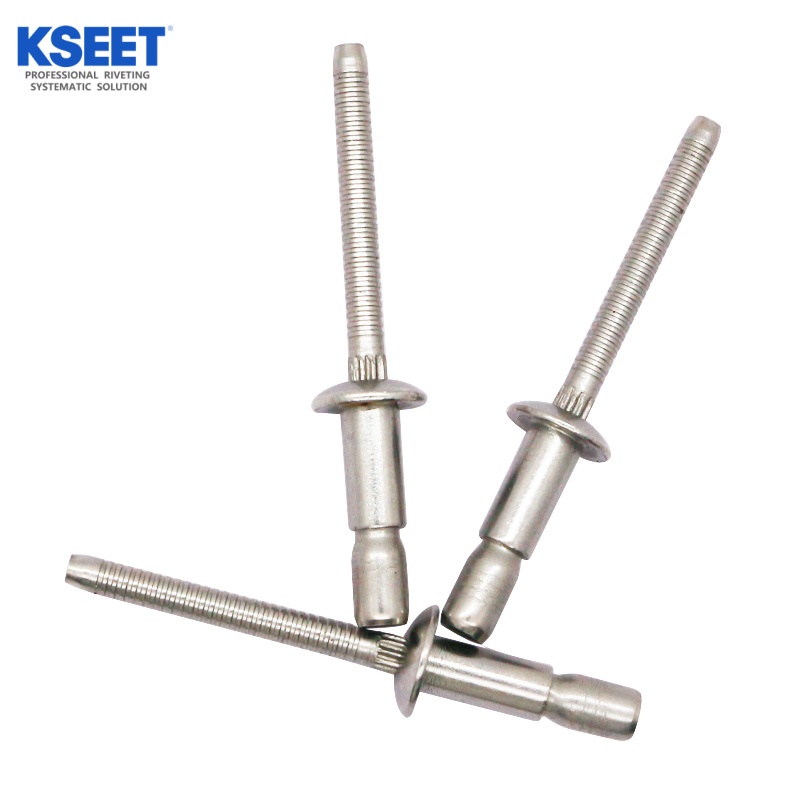
Structural Advantage Illustration
(Illustration shows interlock rivet expansion, mandrel locking mechanism, and typical industrial assembly applications.)
Key Benefits Summary
- ✔ High shear & tensile strength
- ✔ Locked mandrel for extra structural integrity
- ✔ Excellent vibration resistance
- ✔ Strong hole-fill performance
- ✔ Suitable for multi-material assembly
- ✔ Reduces need for welding or complex fasteners
Conclusion
Interlock blind rivets are engineered for high-performance industrial assembly environments where strength, reliability, and vibration resistance are critical. Their unique locking structure and superior hole-filling capability make them an ideal alternative to welding, screws, or standard blind rivets in modern manufacturing systems.
At SZENT, we continuously optimize rivet systems to meet global industrial fastening standards.
📩 CTA (Call to Action)
Request Sample / Contact Us
Looking for high-strength and vibration-resistant fastening solutions?
👉 Contact SZENT for:
- Free samples
- Technical datasheets
- OEM/ODM customization support
📧 Email: https://www.szenttools.com/contact
🌐 Website: https://www.szenttools.com/